

2026.06.27 - 14:00 - 17:00
“South of the Sea” Symposium: Reframing Fu Luofei Through Maritime Histories
- Time2026.6.27 2:00 PM-5:30 PM
- VenueNorth Gallery, 2F, Taikang Art Museum
- SpeakerPan Lü, Chen Ying, Fang Xiaoya
- RespondentCai Tao
- ModeratorXu Chongbao
- Tags:
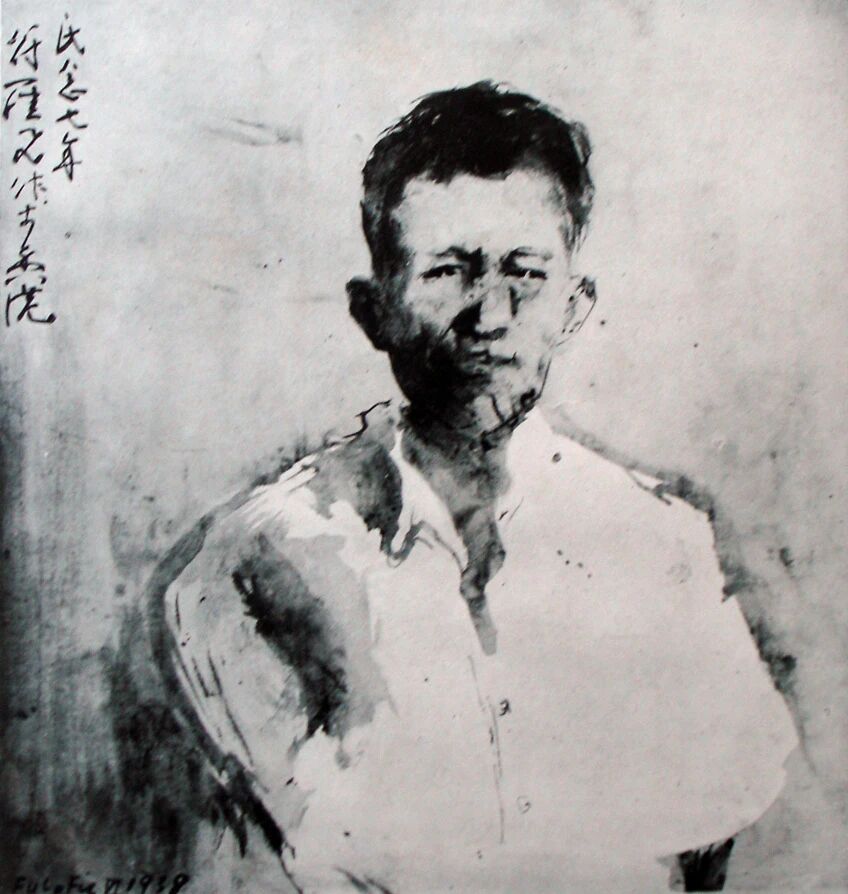
The revolutionary cultures that swept across the globe in the twentieth century, in the words of one contemporary observer, enabled people to “see a brilliant rainbow against a darkened sky.” Like the ocean’s currents and storms, they carried with them new encounters, the circulation of ideas, and possibilities for social transformation. Born in Nangang Village, Wenchang, Hainan, in 1897, Fu Luofei navigated this shifting geopolitical landscape through revolution and war—travelling across Southeast Asia, pursuing artistic training in Europe, forging connections with Naples and Guangzhou, and linking places as distant as Bali and Paris.
“South of the Sea” is not the geographical conclusion of the exhibition, but rather a key to re-entering Fu Luofei’s artistic world. Hainan, Southeast Asia, Hong Kong, Naples, Guangzhou, Bali, and Paris may appear as disparate locations, yet in Fu’s life and work they form an interconnected map shaped by the sea, war, revolution, exile, and reunion.
Through this symposium, we seek to situate Fu Luofei once again within the turbulent historical landscape of twentieth-century China and the wider world. His realism was not merely a stylistic choice, but an artistic position forged through transnational experience, identification with ordinary people, left-wing thought, and the lived realities of wartime China. Taikang Art Museum invites audiences to join three distinguished scholars, the exhibition’s curatorial team, and the museum’s research staff in retracing Fu Luofei’s maritime journeys and rethinking the landscapes, histories, and constellations behind A Changed World.
Pan Lü
Peripheral Realism: Geopolitical and Maritime Networks Behind Fu Luofei’s Wartime Art
This lecture examines Fu Luofei’s wartime realism within the maritime culture and geopolitical networks of Republican-era Hainan. By comparing his academic realist training in Naples during the 1930s with documentary images of Hainan from the same period, and drawing upon the Genglubu navigation manuals that reflect Hainan’s peripheral position, the lecture explores how this regional context shaped the artist’s enduring concern for ordinary people. It also considers Hong Kong as a gateway through which capital and political influence flowed into Hainan, revealing the deeper historical and spatial contexts behind Fu Luofei’s encounter with left-wing art and the world evoked by A Changed World.
Chen Ying
From the European Academy to Chinese Reality: Fu Luofei’s Hong Kong Experiment (1938)
Published in Hong Kong in 1938, The Paintings of Mr. Fu Luofei offers a crucial point of entry for understanding how Fu sought to translate the ideals he had developed during a decade of study in Europe into artistic practice upon his return to China.
As his first monograph published after returning home, the volume brought together representative works from his debut exhibition in China while preserving important examples from his years in Europe. The networks of politicians, business leaders, cultural figures, and overseas Chinese communities that supported both the exhibition and its publication also illuminate how Hong Kong functioned as a unique platform through which Fu rebuilt his artistic reputation and professional connections.
What did it mean for an artist committed to social ideals to return to a homeland engulfed by war? What realities did he confront, and how did these experiences reshape his artistic trajectory? Although Fu Luofei remained in Hong Kong for only a few months in 1938, this brief period marked a decisive turning point in his career. Using The Paintings of Mr. Fu Luofei as its central thread, this lecture reconsiders this formative chapter in the artist’s life.
Fang Xiaoya
Whose “Humanity”? The Society of Humanity, the Cosmopolitan Club, and Marion Greenwood
In postwar Hong Kong, the members of the Society of Humanity gathered within a cultural environment shaped by conditions quite different from those of mainland China. This lecture begins with an unexpected encounter.
The American left-wing artist Marion Greenwood (1909–1970), whose husband operated the Cosmopolitan Club, developed close relationships with members of the Society of Humanity. She painted their portraits and introduced Fu Luofei’s work to audiences in the United States. Her social realist paintings and mural practice appear to share a common visual language with the Society’s artists—but does a shared artistic language necessarily imply a shared political or cultural community?
Building on this question, the lecture examines how Hong Kong offered a distinctive creative environment for artists arriving from the mainland, what forms of solidarity the Society of Humanity sought to cultivate, and how the encounter with colonial Hong Kong exposed both the possibilities and the limitations of international left-wing art.